Podcast
No Hype, Just Standards
Long-form conversations with physicians, operators, and high performers, client stories, and short solo breakdowns. Every episode here has chapters and a full transcript.
Watch on YouTube, or listen on Apple Podcasts and Spotify.
Client stories
Clients of the program, in their own words, at length.
-

Brain fog over 40: the F-18 pilot turned doctor who needed a coach
Client story. Dr. Daniel Monlux flew F-18 combat missions over Iraq, resigned his commission to start medical school as an ensign, and is board certified in family and aerospace medicine. He runs a company that gets pilots through FAA medical certification. He is also a man who, at 49, was getting through the day on coffee and could not remember how to start training. What a physician found in his own data, why knowing what to do was never the problem, and why he says a little humility goes a long way.
-

Eats clean, runs daily, still exhausted at 46: what his bloodwork missed
Client story, and the first episode of No Hype, Just Standards. Rory Pendergast built a personal injury law firm from scratch in San Diego after three years in the Peace Corps, ran Boston more than once, ate clean, did not drink, and by his mid-forties had a headache every day by 11 a.m. and no idea why. A skinny runner who had never lifted a weight, he started at 46. Nine months later he weighs fifteen pounds more, eats more, runs less, has a six-pack, and his kids say he is nicer at dinner.
-

Mark Orvis of Big River Steel reversed type 2 diabetes and lost 110 lbs at 57
Client story. Mark Orvis is a director at Big River Steel who spent a decade building the largest steel mill in North America on twenty-hour days, and got to 297 pounds, an A1C of 10.2, and a stack of prescriptions for the trouble. Nobody told him it was reversible. He audited his own health care the way he audits a production line, found no control plan, and started with one change: no bread. 110 pounds later he is off the medication, and his biological age has gone from 65 to 45.
-

How to stay fit traveling two weeks a month with kids at home
Client story. Beau Gellings, a product marketing leader who travels two weeks a month with two young kids at home, on the collarbone that ended his last good stretch, why he brought his wife onto the sales call, what changed in five months, and the four sets of eight pull-ups he did in Zac's garage the morning they first met in person.
-

Apache commander gained 40 lbs after retiring. How he rebuilt at 50
Client story. Matt Petraitis is a retired Army lieutenant colonel who commanded an Apache cavalry squadron of 550 soldiers, deployed to Iraq, Afghanistan, and Korea, and led a unit through a change of airframe. Then he retired into a new job, a new state, an MBA, his mother's move, and a cancer diagnosis, all in the same six months. He stopped caring about food, put on 40 pounds, and woke up in a hotel room at 48 realizing he would be 50 next year. What he did about it, why fasting alone plateaued, and how a program that fits a travel schedule gave him the standard back.
-
How he lost 92 lbs and escaped the sick care model
Client story. Randall Norwood was over 300 pounds, in a hospital bed with blood sugar off the scale and a lifetime of blood pressure and cholesterol medication on the table. He found Zac through a LinkedIn post. Eight months later he was 92 pounds down, sleeping through the night, back on the court as a college basketball official, and starting a specialty medical sales role. He is clear about which step came first.
-
Gulfstream captain on staying fit through 8-day rotations and hotel food
Client story. Jordan Cole sold his condo, bought an RV, and went from zero flight hours to Gulfstream captain in under four years. Then the eight-day rotations, hotel food, and a knee surgery caught up with him at 39. How a pilot who plans every eleven-minute flight for an hour learned to plan his own body, what accountability looks like when a text lands as you are about to order dessert, and why the FAA medical made it more than fitness.
Conversations
Physicians, operators, and high performers.
-

Fitness expert gives brutally honest fitness advice for men over 40
Bryan Krahn wrote the Men's Health guide to building muscle after 40, then hit 46 and found everything hurt. He explains why men over 40 should start preparing for 50, how strength training has to change with age, why 'my metabolism died' is the wrong explanation for weight gain, and how to handle fat loss, nutrition, sleep, bloodwork, travel and everyday movement while keeping strength and muscle.
-

The doctor who wrote "Lies I Taught in Medical School" on reversing four chronic diseases without drugs
Dr. Robert Lufkin is a practicing physician, medical school professor at UCLA and USC, author of more than 200 peer-reviewed papers and a dozen books, and the inventor of a biopsy needle still used worldwide. Then his own labs came back with four chronic diseases and four prescriptions for life. He reversed all four with lifestyle and wrote Lies I Taught in Medical School. On why normal is not a standard, the one blood test almost nobody orders, what 90 days of compliance can and cannot move, seed oils, and what a CT scan sees that a blood panel cannot.
-
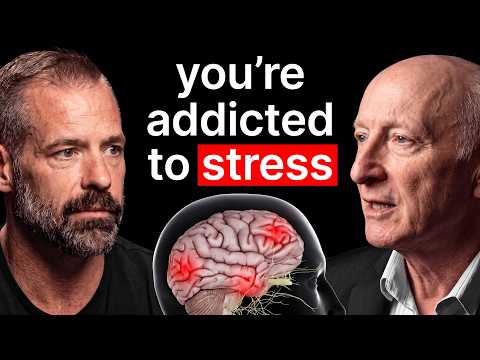
Doctor explains: how to reduce stress as fast as humanly possible
UCLA clinical psychologist Dr. Stephen Sideroff on why stress is necessary and why the load that never lets up is what breaks a man over 40: the two branches of the nervous system, why stress gets wired to success, burn-up rather than burnout, telomeres, the 3 p.m. crash and the 11 p.m. mind, and the one pillar to fix first. With Zac Armstrong.
-

Peptide doctor: the disturbing side effects they don't teach you about
Dr. Mark Gordon, neuroendocrinologist and author of Peptides for Health, on what a peptide actually is, why foreign-sourced product has sent his patients to the ER with anaphylaxis, which labs he runs before anyone touches one, and why the man ordering off an Instagram ad has skipped the only step that matters. With Zac Armstrong.
-

How women over 40 should work out for best results, health and energy
Liz Bradford, former HSBC managing director for North Asia turned coach and co-founder of Maya Health, on the burnout that made her pack up her life and move continents, the 0.5 burnout she caught in time, why midlife women are opting out of corporate life, the 12-minute appointment, wearable data built on middle-aged men, and training for 100. With Zac Armstrong.
-

He nearly lost everything after retiring. Here's how he came back
Retired Green Beret Lt. Col. Scott Mann on what 23 years cost his body and mind, the snakes in the head that arrived days after retirement, how he came back from the edge of suicide and divorce, Task Force Pineapple, and the trust-building craft he now teaches leaders. With Zac Armstrong.
-

Mark Divine's journey from boring finance auditor to Navy SEAL
Retired Navy SEAL Commander Mark Divine on why driven men break under pressure, the day-one BUD/S quit that taught him it is never the body, and the daily practice that keeps a man over 40 from hitting a ceiling. With Zac Armstrong, retired Naval Commander.
-

Navy SEAL commander: "winning" at work is costing you at home
Retired Navy SEAL Commander Jon Macaskill on the executive who can run an operation across three time zones and cannot be present at his own dinner table: what it cost him, how box breathing works on the nervous system, and why he calls it training, not therapy. With Zac Armstrong.
-

Visceral fat doctor: the best way to lose fat in 2026
Dr. Sean O'Mara, retired Army colonel and former ER physician, on why normal bloodwork misses the fat around your organs, heart, and inside your muscle, his own collapse at 48 with perfect labs, what an MRI shows a shredded 28-year-old, and why he tells clients to sprint. With Zac Armstrong.
-

The processed foods epidemic
Chef Robert Irvine on the three years he has spent rebuilding how the U.S. Army feeds soldiers, why the same food system is failing schools and hospitals, and what a man over 40 should change in his own kitchen this week. With Zac Armstrong, retired Naval Commander.
-

I’m a 46-year-old veteran. If you’re in your 30s or 40s, watch this
Retired Marine Major Lee Stuckey, Purple Heart and Bronze Star, on the night in 2009 his mother's call stopped him from pulling the trigger, the two and a half years he did not sleep, why jiu-jitsu never once left him depressed, the four-legged stool, and the inventory every man over 40 should put on paper. With Zac Armstrong, his cadet-school roommate from 1996.
-

Purple Heart recipient shares his combat and life story
Gunnery Sergeant Isaac Gallegos, USMC (Ret.), on the pressure-plate IED in Iraq in 2006 that burned 84 percent of his body and broke his jaw into 37 pieces, the 161 surgeries, the fight to stay on active duty instead of taking a medical retirement, a 292 CFT, a 100-mile ultra, and what he tells a man who says he is done. With Zac Armstrong.
Short breakdowns
Zac, solo, on one question at a time.
-

The perfect diet for men over 40 (according to science)
Zac Armstrong on what the Stanford DIETFITS trial actually found, why no named diet wins for men over 40, what each eating pattern makes easy and hard, and the four questions that pick the diet that survives your worst week: what does the worst week look like, which meal is your weakest, what have you quit and when, and what are you actually trying to change.
-
Following Huberman’s advice but still exhausted after 40?
Zac Armstrong on why five well-known protocols, sleep hygiene, fasting, cold exposure, Zone 2, and caffeine timing, can turn on a man over 40: each assumes a precondition that is often not met, and the caveat that would have told you gets cut from the clip. Plus the three things to do first, two of them free.
-

I tried every longevity supplement so you don’t have to
Zac Armstrong ran a year of 80+ marker panels with his physician and a wearable to test every supplement in his cabinet. Five earned a place because a marker moved and the tracker agreed: vitamin D3, omega-3s, magnesium glycinate, a targeted B complex, and creatine. NAD precursors, greens powders, collagen, and turmeric did nothing measurable. Testosterone boosters are the one category to stop buying, and not because of the price.
-

The only 7 foods you need to heal your brain, gut and body
Zac Armstrong's seven foods for men over 40, each with the slot it fills and what it replaces: eggs for breakfast, plain cottage cheese at 3 p.m., lean red meat two or three dinners a week, salmon twice a week, lentils in place of the rice, cruciferous vegetables in place of the greens powder, and extra virgin olive oil on the two you would otherwise quit. Plus the one thing to remove: liquid sugar.
-

The only supplements you need to reverse aging after 40
Zac Armstrong's supplement list for men over 40, and the shelf to stop buying from: creatine, magnesium glycinate, whey, a multivitamin as a placeholder, and why testosterone boosters, BCAAs, greens powders, collagen, detox products, and high-dose biotin are money spent guessing when a blood panel would have said exactly what you need.
-

Unfortunately, fitness for men over 40 really is this simple
Zac Armstrong on the four free, boring things that move the needle for a man over 40, sleep, protein at a gram per pound of target weight, heavy lifting, and daily movement, why almost nobody does all four at once, the limit the basics cannot see, and the one number a standard cholesterol panel never runs: ApoB.
-

7 brutal fitness truths every man over 40 needs to hear
Seven things a man over 40 has to accept about training, from Zac Armstrong, retired Naval Commander and performance coach: recovery is the limiter, most volume is junk, sleep is the biggest hormone lever, the protein floor is higher than you think, mobility is a strength variable, cardio is what keeps you alive to train, and the hormone conversation belongs with a doctor and bloodwork.
-

The truth about TRT for men over 40: science explained
Zac Armstrong's plain account of testosterone replacement for men over 40: what TRT is, the one fact the ads skip (it hands the job over and your own production shuts down), what it is approved for versus what it is marketed for, what the 5,000-man TRAVERSE trial found on heart risk and the 2025 label change, the honest trade-offs, and three myths.
-
This is boring but it’ll skyrocket your testosterone fast
Zac Armstrong on the boring inputs that move a man's testosterone without a prescription: sleep (one week at five hours dropped healthy young men's testosterone 10 to 15 percent in a University of Chicago study), body fat and the aromatase enzyme, lifting heavy instead of grinding cardio, and removing alcohol and chronic stress. Free, controllable, and faster than the thing you were about to buy.
-

Why all discipline fails (and what to build instead)
Zac Armstrong on why willpower-based health routines collapse under a high-pressure week, the neuroscience of a prefrontal cortex that is most impaired exactly when the decisions matter, and three permanent levers that remove the decision entirely: 60 minutes of Zone 2 a week stacked onto calls, a palm-and-fifths plate template that works in any restaurant, and a phone Wind Down mode that enforces the boundary willpower cannot.
-

The hidden reason you aren't losing fat (it's not your workout)
Zac Armstrong on the skinny-fat executive: why more miles and fewer calories make it worse, the cortisol mechanism that breaks down muscle and stores visceral fat at the same time, what a DEXA scan showed for a private equity partner who looked controlled on paper, and the three-part signal that tells the body it is safe to build.
-

Don't take TRT, do this instead
Zac Armstrong on why fixing the metabolic foundation comes before any hormone conversation: the cortisol, visceral fat, and insulin loop that turns a man's own testosterone into estrogen, why a single low number on a subscription clinic's panel is not a diagnosis, and the 30-day insulin reset he runs first: protein at one gram per pound of target weight, zero liquid calories, and a walk after every meal.
-

I studied 80+ biomarkers. Here's what I found
Zac Armstrong on the difference between sedation and recovery: what two drinks or a THC gummy do to resting heart rate, HRV, REM sleep, morning cortisol, and testosterone, shown on a Fortune 500 CEO's wearable before and after, and the four-step sleep protocol that rebuilt his night in seven days.
-

Brutally honest fitness advice for men over 40
Zac Armstrong to the former D1 athlete or military officer who is elite in the boardroom and soft in the mirror: the 22-year-old playbook of heavy lifts and long runs now produces inflammation instead of muscle, the injury-burnout-quit cycle costs identity, and the replacement is Zone 2 cardio for the mitochondrial base plus controlled eccentric lifting that builds muscle at a fraction of the joint stress.
-
High cortisol at 40: what nobody tells you
Zac Armstrong on what a sympathetic nervous system that never switches off does to a man over 40: cortisol that stores fat around the organs, testosterone crowded out, resting heart rate and blood pressure climbing toward a cardiac event in the early fifties. Two free tools to force the off switch: track HRV, and a 60-minute digital sunset with 4-in, 6-out breathing.
-

Feeling tired at 3 p.m. every day? Do this to feel energized again
Zac Armstrong on the 3 p.m. crash: the glucose spike from a carb-heavy lunch, the crash that triggers cortisol, the caffeine that hides it and wrecks deep sleep, and the free fix that breaks the chain, a brisk 10-minute walk after your heaviest meal.
-

The exact system to lose fat and build muscle for men over 40
Zac Armstrong on why the five-day bodybuilding split fails every executive whose week is unpredictable, the cortisol and insulin biology running underneath the missed sessions, and the minimum effective dose that survives travel: three 20-minute full-body sessions a week and one gram of protein per pound of target body weight, every day.
Next step
Start with a call.
Forty-five minutes with an advisor: where you are, what the data would show, which coach fits, and whether the program is right for you. If it is not, you will be told.
The call is free. HSA and FSA funds may apply to the program, depending on your plan.